Write bug reports developers can't argue with
October 17, 2026 · 5 min read
Every QA engineer knows the replies. Can't reproduce. Works on my machine. Which environment? Is this still happening? None of them are bad faith. They happen because a bug report is usually a description of a bug, not a definition of one. Here's how to write the second kind.
1. Say exactly what “wrong” means
“The total is wrong” starts a discussion. “The total should be 74 and shows 49” ends it. In Bug Report you add this as a check while recording: point at the element, choose what it should be (its text, a number, a value, visible or gone, a row in a table) and the report keeps both what you expected and what it showed.
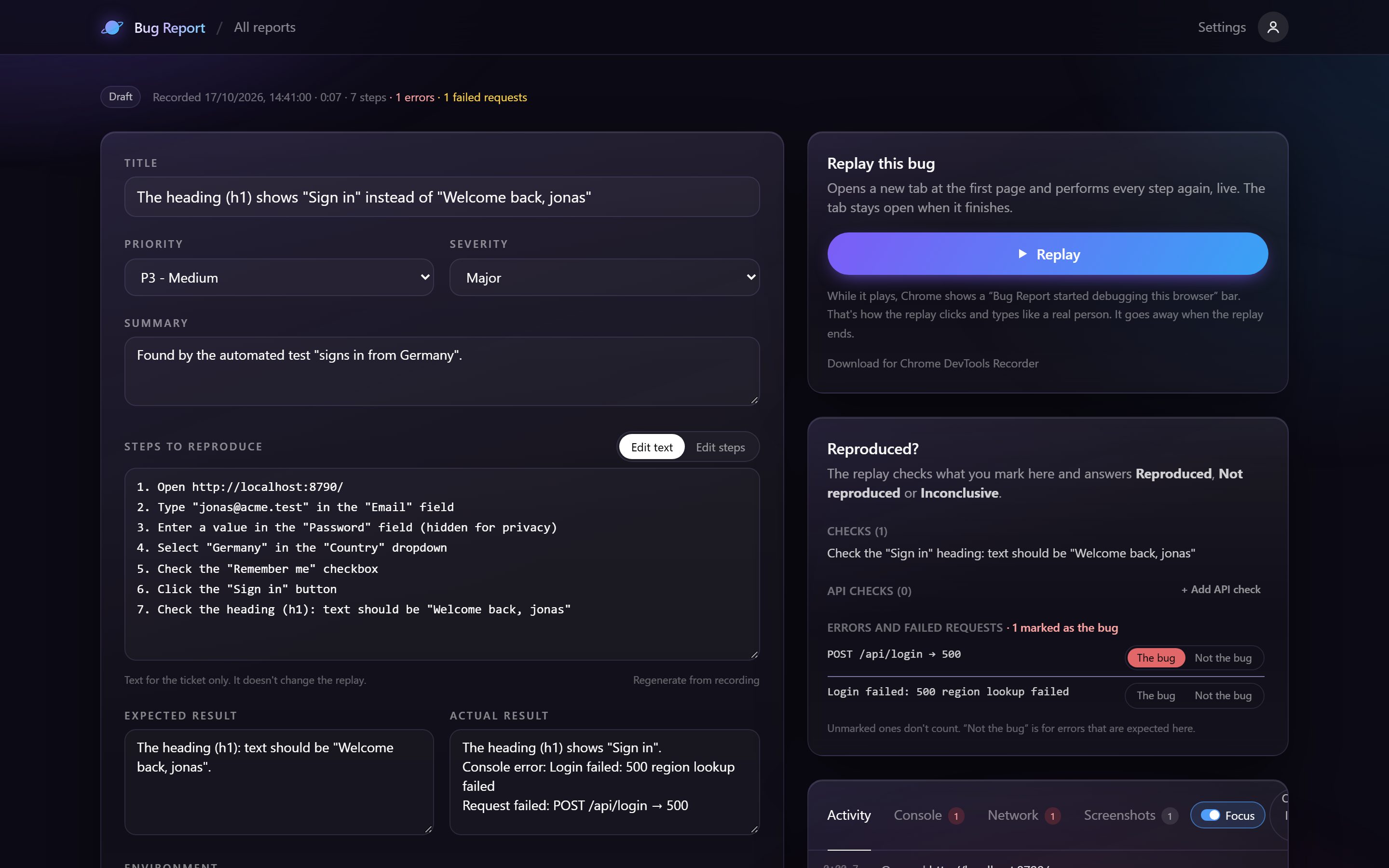
2. Point at the error that matters
A page throws a dozen console warnings and fires a hundred requests. A developer can't tell which one you mean. Mark it: next to each failed request and console error there's The bug and Not the bug. Expected errors stop being noise, and the real one is impossible to miss.
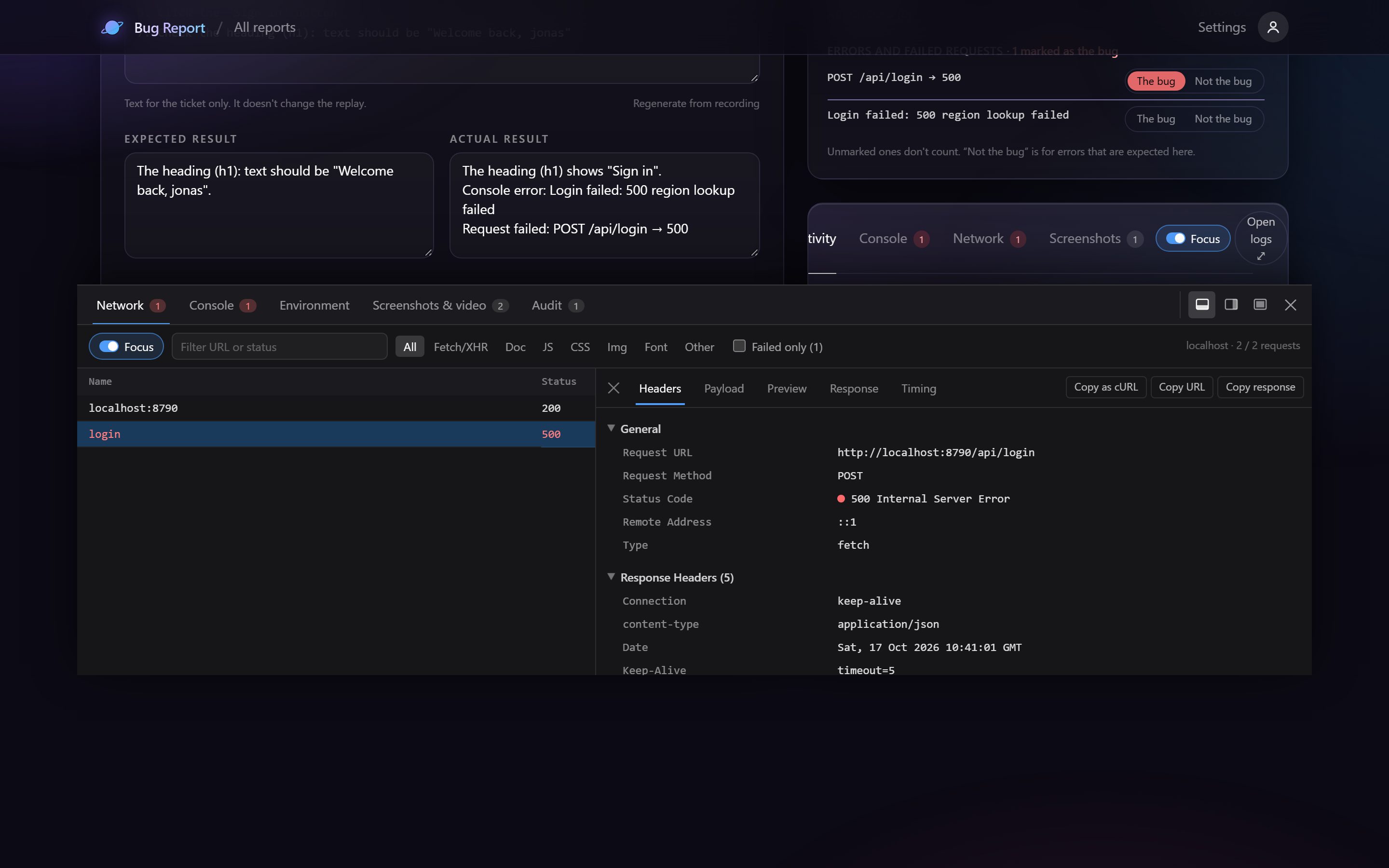
3. Give the environment without being asked
Browser and version, OS, window size, screen, language and time zone are captured automatically. So are the pages you went through and the requests they made. “Works on my machine” becomes a question you can answer by comparing two lists.
4. Steps someone else can follow, or run
Good steps are short, in order, and name things the way the screen does: Click the “Sign in” button, not submit the form. Bug Report writes them from what you did, and you can reorder, edit or switch steps off. Then the developer doesn't have to follow them by hand: Replay runs them.
5. Let the replay answer “is it still broken?”
Because the bug is defined by checks and marked errors, a replay can judge it: Reproduced if anything you marked is still wrong, Not reproduced if everything checked passes, Inconclusive if it couldn't tell. Developers replay it after their fix; QA replays it before closing the ticket. Nobody has to take anyone's word for it.
A checklist to keep
- A title that says what's wrong, not where: “Total shows 49 instead of 74”
- At least one check with the expected value
- The failing request or error marked as the bug, the expected ones as not the bug
- Steps that start from a page anyone can open
- Passwords and personal data left out (Bug Report hides them for you)
Start free, or read how the same idea works for automated tests.